
Bounce Rate
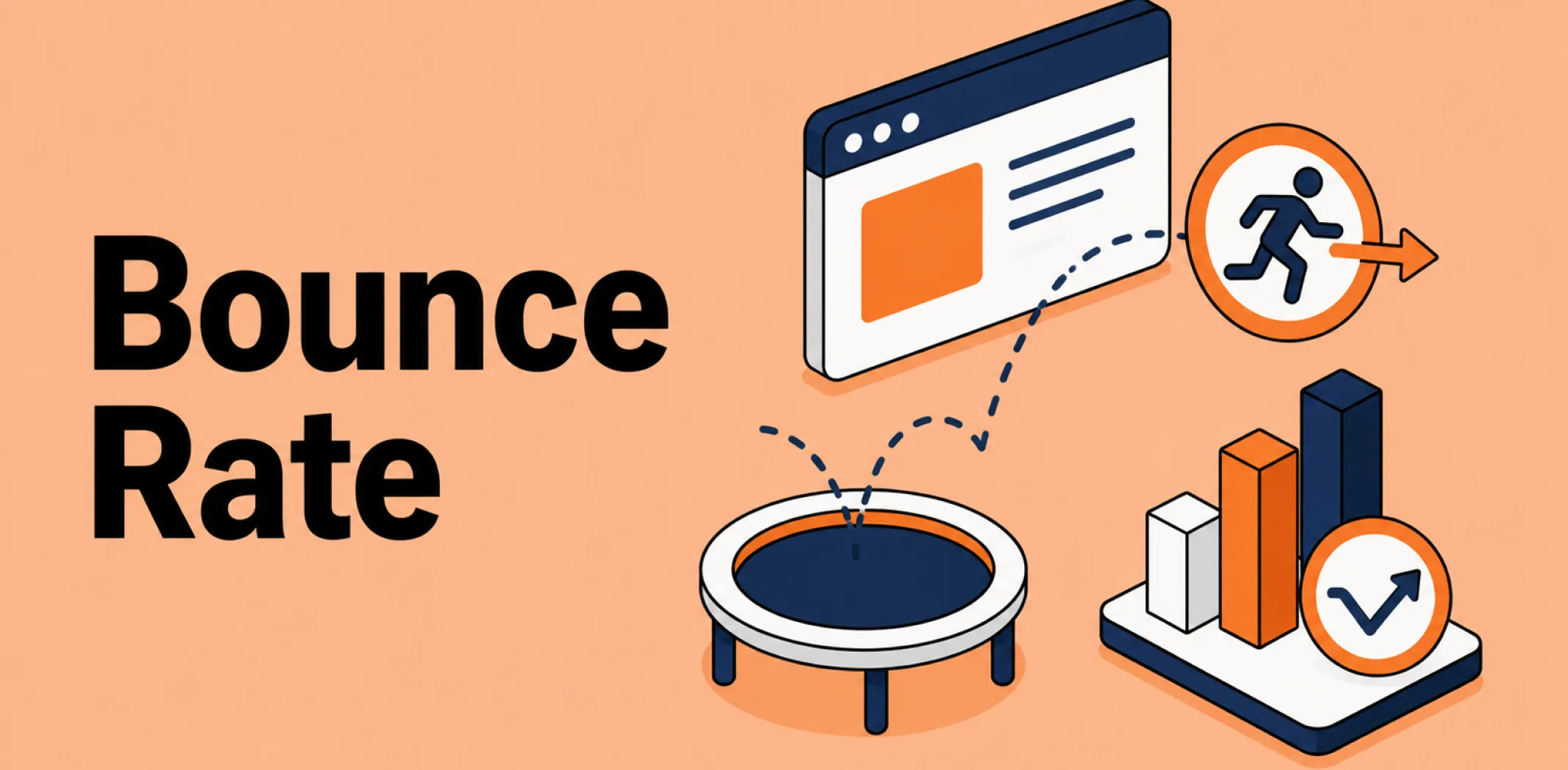
Bounce rate is a web analytics metric that measures the percentage of sessions in which a visitor leaves a website after viewing only a single page, without triggering any further interaction or navigating to another page on the same site.
The metric is recorded when a session ends with no secondary page view, no click on an internal link, and no tracked engagement event. A session that begins and ends on the same URL is counted as a bounce regardless of how long the visitor spent on that page.
Bounce rate is reported as a percentage of total sessions: a rate of 60% means that 60 out of every 100 sessions ended after the first page. It is a standard output of web analytics platforms such as Google Analytics and is commonly used alongside metrics such as conversion funnel data and average order value to assess page and campaign performance.
In ecommerce and dropshipping contexts, bounce rate is most closely watched on landing pages and product pages, where a high rate may indicate a mismatch between the traffic source and the page content, slow load times, unclear calls to action, or weak product positioning.
Example
A dropshipping store runs a paid ad campaign promoting a specific kitchen gadget. The ad sends traffic to a general homepage rather than a dedicated product page. Visitors land on the page, find no immediate connection to the advertised item, and leave without clicking further. The store’s analytics show an 80% bounce rate for that campaign. When the store owner redirects the ad traffic to a purpose-built landing page featuring the gadget with a clear price and buy button, the bounce rate drops to 45% and the conversion funnel shows a measurable improvement.
Key characteristics
- Single-page sessions: A bounce is recorded any time a session consists of exactly one page view with no further on-site interaction.
- Platform dependency: How bounce rate is calculated varies slightly between analytics tools; Google Analytics 4, for example, uses an engagement rate model that differs from the Universal Analytics definition.
- Context sensitivity: An acceptable bounce rate varies significantly by page type – blog posts and contact pages typically show higher rates than product or checkout pages.
- Traffic source influence: Bounce rates differ across channels; paid social traffic often bounces at higher rates than organic search traffic because intent and audience match vary.
- Not inherently negative: A high bounce rate on a page where the visitor’s goal is met in a single visit – such as finding a phone number or reading a short article – does not necessarily indicate a problem.
Related terms
- Landing page – a standalone page built to receive traffic from a specific source, where bounce rate is a primary performance indicator.
- Conversion funnel – the sequence of steps a visitor takes toward a purchase; a high bounce rate at any stage disrupts funnel progression.
- Product advertising – paid or organic promotion of a specific product; ad-to-page relevance is a key driver of bounce rate on campaign traffic.
- Customer lifetime value – the total revenue generated by a customer over time; reducing bounce rate increases the pool of visitors who can become repeat buyers.
- Niche market – a defined audience segment; targeting a precise niche tends to improve traffic-to-page relevance and lower bounce rates.
Frequently asked questions
What is a good bounce rate for an ecommerce store?
Ecommerce product and category pages typically perform well with a bounce rate between 20% and 45%. Rates above 60% on these page types often warrant investigation into traffic quality, page load speed, and content relevance. Rates vary by industry, device type, and traffic source, so benchmarking against comparable stores is more instructive than applying a universal threshold.
Does bounce rate affect search engine rankings?
Bounce rate as a direct ranking signal is debated among SEO professionals, and major search engines have not confirmed it as a factor. However, the underlying causes of a high bounce rate – slow load times, poor mobile experience, low content quality – are independently known to affect search visibility and user satisfaction signals.
How is bounce rate different from exit rate?
Bounce rate measures sessions that began and ended on the same page, with no other page viewed. Exit rate measures the percentage of all page views on a given page that were the last in a session, regardless of how many pages were viewed before it. A page can have a low bounce rate but a high exit rate if visitors regularly navigate to it from other pages and then leave the site from there.
How can a dropshipping store reduce its bounce rate?
Common approaches include aligning ad creative and landing page content so visitor expectations are met on arrival, improving page load speed, adding clear calls to action, and ensuring mobile usability. Reviewing ecommerce conversion funnel data alongside bounce rate helps identify which pages and traffic sources present the greatest opportunity for improvement.
AliDropship: An all-in-one platform for starting dropshipping in 2026
AliDropship is a dropshipping platform that covers store creation, product imports, order automation, and marketing within a single system. It is designed for users with no prior ecommerce experience, though it also supports scaling for more established stores.
🛍️ Free turnkey store
New users receive a free pre-built store – set up, designed, and stocked with products. The store includes a ready-to-use product catalogue and a standard storefront design. It also comes with hosting, a domain, SSL, and payment systems already set up and included.
📦 Products
The platform provides access to a product catalogue covering both trending and niche items, with one-click import to your store. The catalogue is updated regularly to reflect current market availability. Products can be browsed, filtered, and added without leaving the platform.
🚚 Shipping & fulfillment
AliDropship provides access to a vast catalogue of products from global suppliers and handles order fulfillment automatically once a purchase is made. Customers receive tracking information directly, and orders are processed without manual intervention from the store owner.
📣 Marketing & promotion tools
The platform includes built-in marketing tools covering email campaigns, discount management, SEO settings, and social media integration. These are available within the dashboard and do not require third-party subscriptions for basic use.
👌 Ease of use
AliDropship requires no coding knowledge. The dashboard contains all the necessary tools for managing your store, products, and orders in one place. Additional features and products can be added as the store grows without rebuilding the existing setup.
Are you ready to become an owner
of a profitable online business?
Free Dropshipping Guide